
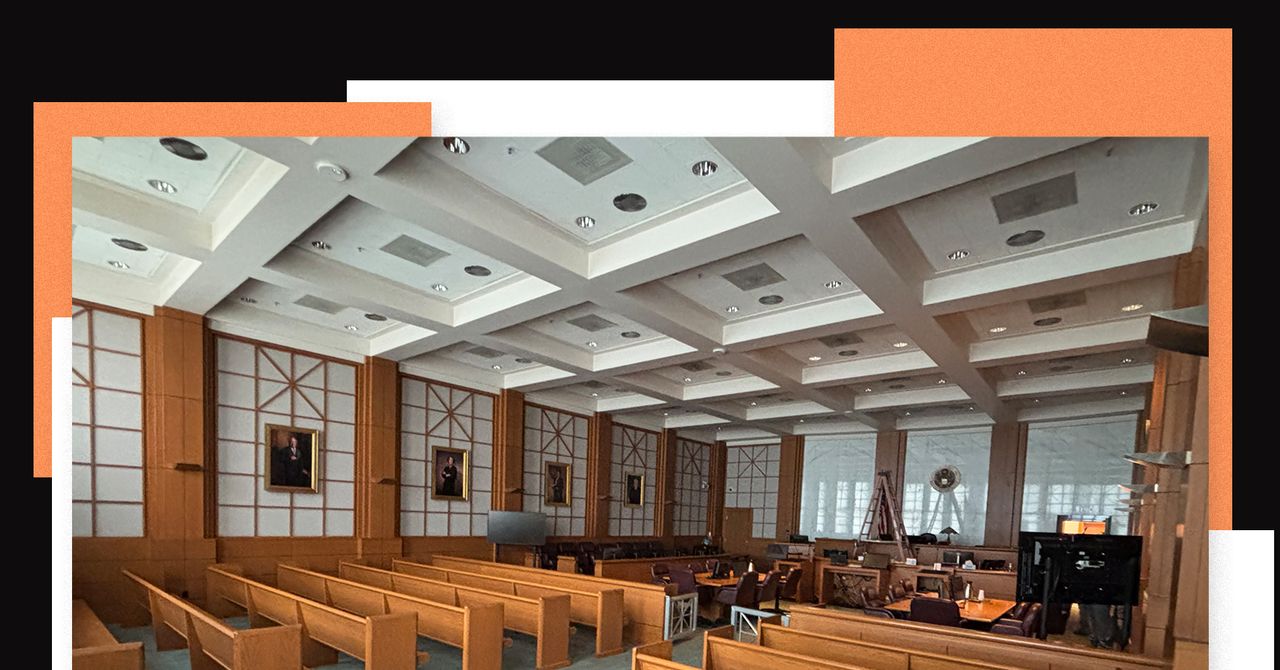
The final stragglers testified on Wednesday in the Musk v. Altman trial. The witnesses generated few waves, aside from the revelation that Microsoft has so far spent over $100 billion on its partnership with OpenAI. Rather than focus on that, I wanted to bring you a candid observation that my colleague Maxwell Zeff and I can’t stop talking about after spending nearly three weeks watching the trial.
The courtroom is littered with butt cushions.
Several of the hard, wooden benches on the right side of US district Judge Yvonne Gonzalez Rogers’ courtroom are reserved for OpenAI and Microsoft’s attorneys, executives, and other members of the defense. About 10 people, including OpenAI CEO Sam Altman and general counsel Che Chang, have benefitted from thick black cushions—the plushest of them from the brand Purple; $120 from Target—that spare their butts from hours of sitting. Some cushions have rounded corners, while others are square. On Wednesday, Chang even put one behind his back, a less common but not unprecedented move in the courtroom.
OpenAI President Greg Brockman and his wife, Anna, have watched a considerable portion of the trial—and have both been prolific users of pristine white pillows. Judging from the tags bursting from the seams, the pillows seem to be from the sleeping goods brand Coop, which sells a two pack of alternative down-filled throw pillows for $35.
On Wednesday, an OpenAI bodyguard carried a purple handbag into the courtroom, with a pillow for each of the Brockmans. Anna gave her husband just a minute to suffer in pillow-less oblivion before she discreetly passed one to him and then situated her own. I felt bad for OpenAI chief futurist Joshua Achiam, who later took Brockman’s seat but wasn’t left with either of the pillows. (Achiam eventually did obtain one of the more standard black cushions.)
OpenAI did not immediately respond to WIRED’s request for comment.
One longtime technology lawyer told WIRED that using cushions or pillows isn’t exactly “customary,” but noted, “it’s not totally out of left field.” Personally, he said, he has never seen lawyers use pillows or cushions during his trials, but then again, he’s “never been involved in a trial that has lasted as many days as that one.”
The core litigators in this case sit in comparatively luxurious leather chairs, though a couple do show signs of fraying, so maybe the padding isn’t as robust as it appears.
My last time in this courtroom for an hours-long stretch was in 2021, covering portions of the Epic Games v. Apple trial. But capacity was limited back then because of Covid concerns, so I had plenty of room to stretch out. This time around, the courtroom has been filled nearly to its maximum capacity—about 150 people—including bench seats for up to 90.
I thought about bringing my own cushion roughly an hour into my first day of the trial at the end of April, because, well, these benches are deeply uncomfortable. But I didn’t want to come off as weak. None of the other two dozen or so reporters regularly in attendance—including one who is pregnant—seemed to bring cushions, at least, initially. So I went through a run of six days with my bottom and back getting sorer by the minute.
Last week, after a particularly brutal morning, I finally decided to bring in some help. I couldn’t find the well-padded seat cushion meant for stadium bleachers, so I settled for a “cooling” cushion passed out at the steaming-hot outdoor venues at the Tokyo Olympics. About two seconds into using it on Wednesday morning for the first time, I ruled it counterproductive. It was too small and too thin to offer any relief. My back got particularly stressed when furiously typing notes about the Musk-inspired jackass trophy, which reportedly once had its own pillow.
Four hours in, I gave up on the pillow entirely. But I noticed one New York Times reporter who eventually caved, as well as the courtroom artist—who has a particularly colorful cushion—remained seated on their pillows. Maybe I’ll find a better remedy for next week, when Gonzalez Rogers will hear arguments about potential penalties.
Maxwell Zeff contributed to this report.
This is an edition of Maxwell Zeff’s Model Behavior newsletter. Read previous newsletters here.
