
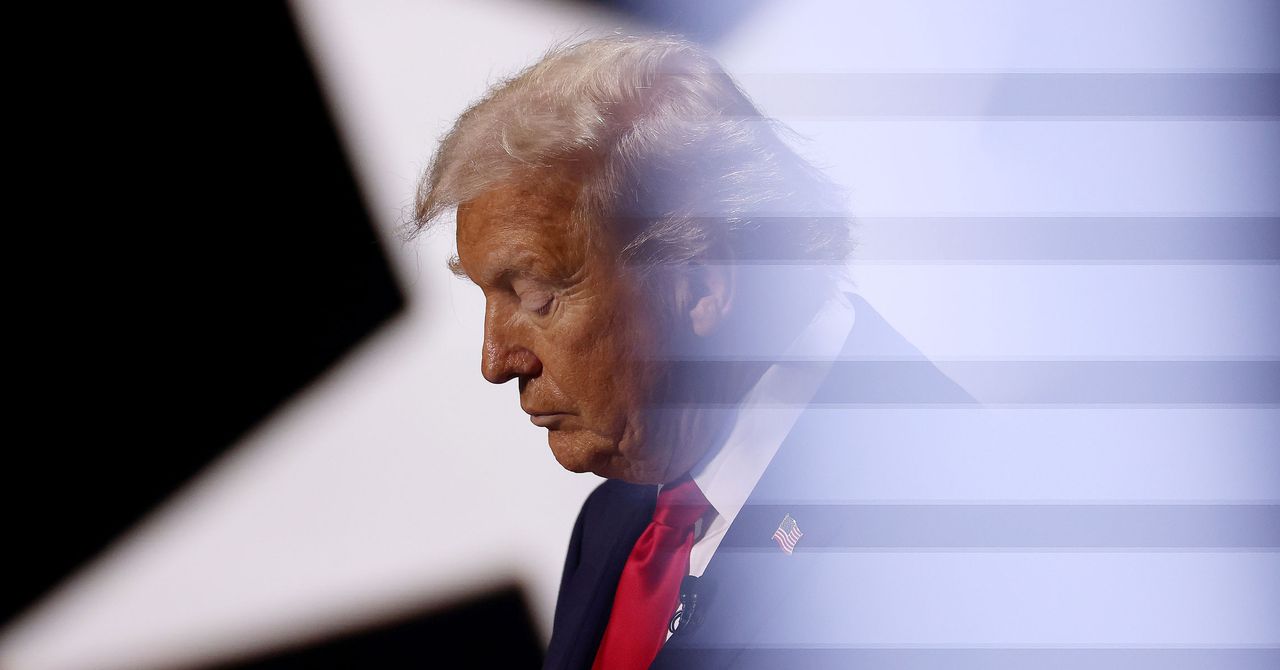
President Donald Trump signed a highly anticipated executive order on Thursday that sets in motion a plan to establish a national regulatory framework for artificial intelligence while undercutting states’ abilities to enact their own rules.
The order, titled “Ensuring a National Policy Framework for Artificial Intelligence,” creates an AI litigation task force within the Justice Department to directly challenge state AI laws the administration finds to conflict with federal policy. It also directs the Department of Commerce to craft guidelines that could make states ineligible for future broadband funding if they pass “onerous” AI laws.
The push for sweeping federal preemption of state AI laws has largely been fueled by AI investors, conservative policy shops, and tech industry trade groups. These groups have argued that a patchwork approach to AI regulation could stunt Silicon Valley’s AI boom and reduce America’s competitiveness on the global stage. White House AI and crypto adviser David Sacks has been one of the most vocal proponents of a light-touch approach to AI regulation.
“The EO gives your administration tools to push back on the most onerous and excessive state regulations,” Sacks told Trump during Thursday’s signing ceremony. “We’re not going to push back on all of them. For example, kids safety we’re going to protect.”
The order is similar in many respects to an earlier draft obtained by WIRED but with a few key differences. The executive order instructs Sacks and Michael Kratsios, the assistant to the president for science and technology, to prepare a legislative recommendation establishing a federal policy framework for AI. One of the new additions is a carve-out within this legislative recommendation asking Congress not to preempt state AI laws that aim to protect children, promote data center infrastructure, and encourage state governments to procure AI tools.
“We want one central source of approval, and we have great Republican support. I think we probably have Democrat support too, because it’s common sense,” Trump said during Thursday’s signing ceremony. “Every time you make a change, and it could be a very reasonable change, you still won’t get it approved if you have to go to 50 states. This centralizes it.”
In the absence of federal regulations, officials from states across the country have pushed through their own investigations and legislation to govern the use and development of AI. Trump’s executive order specifically calls out certain state AI laws—such as Colorado’s SB24-205, which aims to limit “algorithmic discrimination” in AI models—as an attempt to “embed ideological bias.”
Several other state AI laws may also fall in the crosshairs of this executive order. California governor Gavin Newsom signed a law in September requiring large tech companies to publish safety frameworks around their AI models. In June, New York’s legislature passed a bill that would empower the state’s attorney general to bring civil penalties of up to $30 million against AI developers that fail to meet safety standards. That bill is currently sitting on New York governor Kathy Hochul’s desk, awaiting her signature or veto—though she’s reportedly considering amendments that could weaken the bill significantly.
