

When people see our projects, they often assume we are a large studio. We’re not. Obys has always been a small team. Focused. Stable. Hands-on.
Today we work from Europe with clients around the world, but our structure hasn’t changed much. We still believe a compact team can go deeper, think more clearly, and care more about every detail.
For us, “big work” was never about scale in numbers. It’s about the weight of ideas. About building projects that feel considered, structured, and meaningful. Being small is not a limitation. It’s a discipline.
How We Built Ourselves Before Clients Built Us
Obys did not start with big clients. Seven years ago, we didn’t wait for a dream brief. We created our own. We built experimental websites. Educational projects. Concept-driven platforms that no one asked for. We treated side projects as real projects. With the same discipline. The same attention to detail. The same obsession with typography and structure.
Those experiments brought us our first international recognition. Awards came before “big” clients did. And because of that, the clients who approached us already understood what we stand for.
We are self-made in that sense. We never positioned ourselves as a service studio waiting for direction. We built our own narrative first.

Graphic Design Mindset in a Digital World
Our background is rooted in graphic design: typography, grid systems, composition, and hierarchy. When we moved deeper into web, we didn’t abandon those principles. We brought them with us. For us, the web is not a playground of random effects. It is a structured environment where storytelling lives inside systems.
We teach designers to experiment but to experiment responsibly. You can break the grid only if you understand it. You can distort typography only if you respect it. Freedom without structure is noise. That philosophy runs through every project we create.
Storytelling as the Core of Everything We Build
If there is one thing that connects all our projects, it is narrative. Storytelling acts as the invisible structure that holds the entire experience together. Whether we are working on a scientific platform like Glyphic, an experimental manifesto like Grids, or a brand world like MAKHNO, the starting point is always the same: understanding the story behind the project.
In that sense, we often approach websites the way editors approach long-form publications. A good editorial piece is not just a collection of paragraphs. It has tension. It has contrast. It has silence between strong statements. Digital experiences work the same way. This storytelling approach gives our work depth. It creates layers that reveal themselves gradually. And it allows a small team like ours to build projects that feel larger than their scale because they are grounded in meaning, not in volume.
When the story is strong, the system becomes clear. And when the system is clear, design becomes powerful.
Glyphic Biotechnologies – Designing for the Unknown
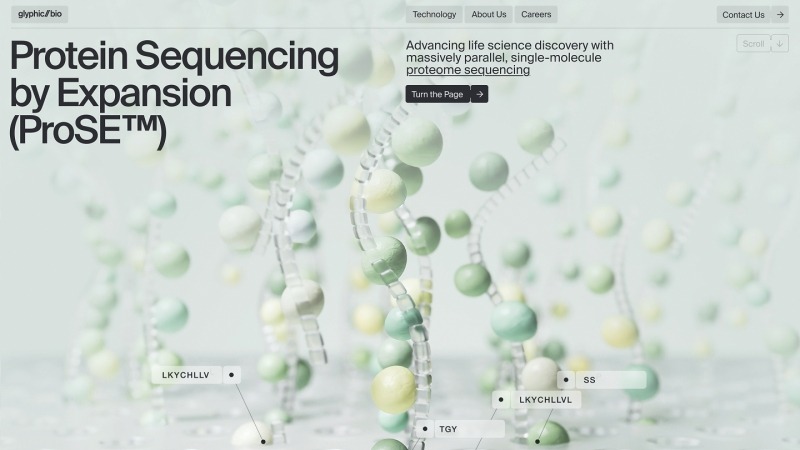
Glyphic is developing protein sequencing by expansion. It’s a technology that requires explanation even within the scientific community. The challenge wasn’t to make it look innovative. It already was. The challenge was to make it understandable.
We built the website as a narrative system. Dense visual sections alternate with calm, readable blocks. PNG-sequence animations respond to scroll, letting users move through the explanation at their own pace. When you work on projects like this, you realize design can carry responsibility. You’re not just presenting a company. You’re shaping how people understand new ideas.
That’s the level of work we’re interested in.
Grids – When Structure Becomes a Statement
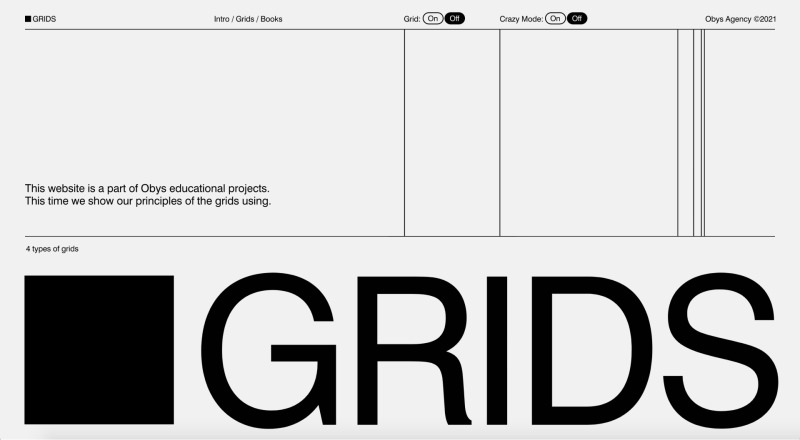
Grids started as an internal exploration. We wanted to revisit something basic: the grid system. There’s a tendency in digital design to treat structure as invisible or restrictive. We disagree. Structure is emotional. It creates rhythm, tension, and balance. It gives content authority.
Grids became a digital manifesto about that belief. It later received Site of the Month on Awwwards and Red Dot Best of the Best, but what stayed with us was something else – the feedback from designers who said it changed how they think about layout.
Sometimes your internal experiments say more about your studio than client work.
MAKHNO — Art of Home
Our collaboration with MAKHNO was different. They are an architecture studio. Strong identity. Strong materials. Strong character.
The concept was “Art of Home.” We translated it literally into the interface. When you enter the website, you see a house with three windows – three digital spaces under one roof. Technically, it was challenging. We had to combine an e-commerce platform and a corporate site into one ecosystem. Unified, but clearly separated.
Emotionally, it was even more important. We wanted the website to feel tactile. Almost physical. To reflect the craftsmanship and the spirit of the team behind it.
This project reminded us that digital design can feel architectural. You build space. You build movement. You build atmosphere.
Obys Design Books — Why Side Projects Matter
Alongside client work, we build our own projects. Obys Design Books is one of them – a curated platform dedicated to design books. It’s quiet. Structured. Focused on typography and grid.
We didn’t build it because it was strategic. We built it because we care about design culture. Side projects keep us honest. They remove external expectations. They allow experimentation without compromise.
If you only design within client constraints, you risk losing your curiosity. For us, education and self-initiated projects are part of the same ecosystem. We share our process, build structured programs, and open our thinking to the community. Teaching forces clarity. It pushes us to refine our ideas.
And that clarity returns to our commercial work.

NLC — When AI Becomes a Creative Amplifier
New Layer Capital was a very different kind of challenge for us. The brand identity was bold. Bright. Visually loud. It wasn’t our typical restrained, structured aesthetic. And that was exactly the point. With NLC, we had to work inside a very expressive brand language and respect it without losing our own design discipline.
There was another challenge: there was no visual content. No photography. No illustrations. No ready-made assets that could carry the storytelling. And the website still needed to feel rich and dynamic.
That’s where AI became practical. Not as a generator of ideas. The ideas were ours. The narrative structure was ours. The visual direction was ours. But AI allowed us to extend those ideas into visual material faster and more flexibly than traditional production would allow. Today, AI is becoming a real working instrument in digital design. But it only works when the concept is strong. Without a clear system and narrative, AI output is just noise.
For us, NLC became an example of how technology can support storytelling when human intention remains at the center.
Staying Small on Purpose
There is something powerful about staying small. Decisions are faster. Discussions are deeper. Responsibility is shared. Everyone understands the full system. We don’t divide work into narrow fragments. Designers understand development. Developers understand motion. Everyone understands a concept. This creates cohesion.
Over the years, we’ve been recognized multiple times as Studio of the Year by CSSDA and once by Awwwards. Recognition is meaningful, but it’s never the target. The target is always the work. We choose projects carefully. We invest deeply. We build with intention.
That’s how a small agency can create work that feels larger than its size.

Where We Are Now
Today, Obys operates from Europe. Our clients are international. Our ambitions are bigger than ever. But our structure remains simple. A small team. Clear thinking. Strong systems. Projects that carry weight.
We believe the future of digital design is not louder visuals or more effects. It’s clarity. Responsibility. And the courage to build work that actually means something.
That’s the creative life we chose. And we’re just getting started.
