
S&T Online Photo Gallery
The vast majority of my stargazing is done at home. In the close suburbs of Portland, Oregon, I am under Bortle 7 skies — a challenge, but not overly disappointing when you’re used to it.
But now I’ve been spoiled by a single night in Bortle 1 conditions.
I’d been to one other dark-sky campout, the 25th annual Oregon Star Party in the Ochoco National Forest in 2012. I had no plan, no equipment, and little understanding of how special the site was. I was happy to wander in the dark to peek through other people’s telescopes.
This time, I way over-prepared. I spent weeks getting ready for a dark-sky weekend at the Oregon Museum of Science and Industry (OMSI) Camp Hancock Field Station in Central Oregon with the Rose City Astronomers (RCA).
Paranoid about dark adaptation, I covered my red lights with extra layers of red film. I applied the film to magnetic screen protectors for my devices, so I could swap clear and red screens with ease. I packed so much food, and I was in danger of going overboard on power banks.
And then it felt like everything went wrong. The star party nearly didn’t happen. The camp was evacuated two weeks before the event due to the Black Rock wildfire, but we got the go-ahead with days to spare. My drive out to the site was hampered by snarled traffic and a possible fire on the highway. I’d scarcely arrived when I learned that, at the last-minute, our weekend had been cut to a single night due to a water issue.
But the OMSI staff and RCA organizers handled the chaos with grace, if not ease. We were there for the stars, after all. I set up my zero-gravity chair and smart scope in the grass, slipped on my hat, winter coat, and “space pants” — cosmic-themed sweatpants — and awaited darkness.
The. Sky. Was. Amazing.
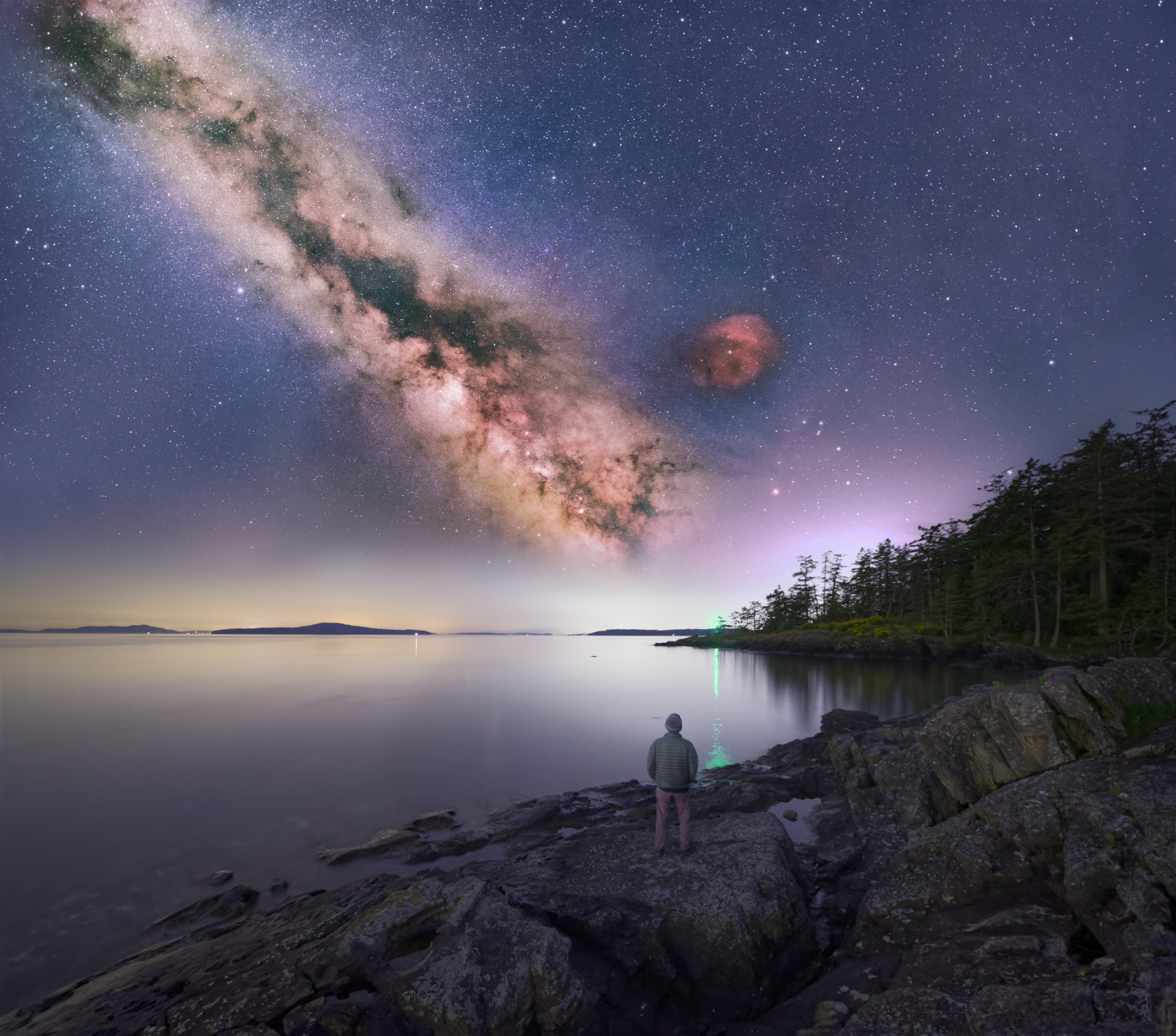
It was a freaking festival of stars. Sparkling jewels of light against a black sky. With my unaided eyes, I easily made out the Double Cluster, the Andromeda Galaxy, Delphinus, Sagitta, and even the Coathanger asterism — objects that require equipment at home. I laughed at the clear and obvious Milky Way. I was quite simply stunned by the rich tapestry of celestial delights on full display.
Facing north-northeast, I marveled for hours at the blazing constellation of Cassiopeia. Periodically, I glanced over my shoulder to gasp at the starry skies all around me. I directed my smart scope to image various galaxies, nebulae, and clusters, then used a pair of low-powered binoculars to scan the sky — all the while feeling awe-struck and overcome. My eyes brimmed with tears as I tried to figure out how in the world I would be able to describe the sky above me.
At home, under light-polluted skies, I have to actively reach for the stars. They are distant and washed out. I am cut off from the night sky, and it can be a lonely feeling. It takes stubborn effort and intention to pursue astronomy when even the Big Dipper is lackluster.
But under dark skies? The stars are right there, in your face, and they cannot be ignored. I felt I could stretch up and brush them with my fingertips. The Pleiades — normally elusive and visible only out of the corner of my eye — were bright and dazzling as they rose above the horizon. Not only that, I also saw a couple of meteors streak across the sky, and the International Space Station.
In the six hours I spent beneath the stars, I felt deeply grateful for the experience, and sharp sadness for everyone who will never get to see such an intense night sky.
Back in Portland, looking up at light-polluted skies is like attending the symphony with cotton stuffed in my ears: a tremendous disappointment. Having the stars so close felt comforting and inclusive, and since then, I have longed to recline under such a stellar blanket again. After the celestial raiment of Camp Hancock, it was frankly depressing to be able to make out only three of Cassiopeia’s stars.
A few days after my homecoming, however, Jax the dog needed to go out around 5:30 a.m. As I waited for him to do his business, I looked up. “Oh, hey!” I exclaimed at Orion tiptoeing across the roof — only a fraction as brilliant as at Camp Hancock, but very much a welcome sight. I felt my willful enthusiasm reasserting itself, despite the light pollution.
There is still so much to see, at home and away. While the shining constellations of the star party are burned into my memory, I feel a familiar thrill that the longer, darker nights of autumn and winter are on the way. No matter the Bortle rating, I’ll spend many cold but gleeful hours under the stars.
