
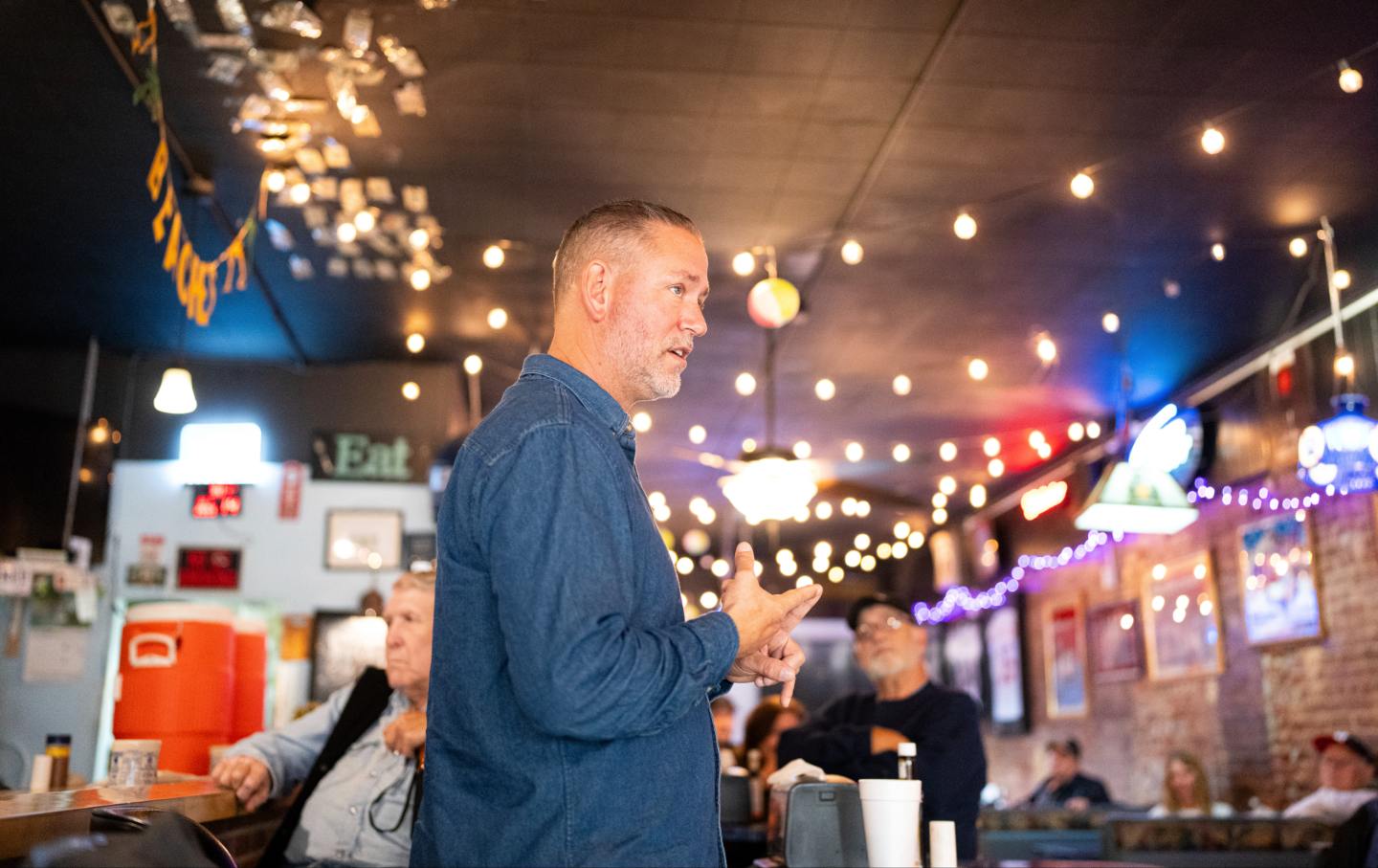
The independent populist from Nebraska, who came close to winning in 2024, is running to unseat one of the Senate’s wealthiest and most self-serving members in 2026.
Dan Osborn, the Nebraska steamfitter whose unexpectedly strong independent US Senate campaign drew national attention in 2024, is running once more against not just a sitting Republican senator but the corruption of billionaire-bought politics.
Osborn’s name will appear on an independent ballot line in November 2026, opposite that of wealthy Republican incumbent Pete Ricketts. But in many senses, the real target of the former union leader’s candidacy is the corruption of American democracy that has allowed filthy-rich campaign donors to buy influence within both major parties. “I’m tired of being ruled by billionaires who don’t know what life is like for normal working people, says Osborn, expressing a frustration that has been mounting among Americans who are struggling to pay their bills while a new class of oligarchs is accumulating so much wealth that there is now open speculation about which billionaire will become the world’s first trillionaire. The volume on that discussion went up considerably last week after Congress passed the so-called “One Big, Beautiful Bill,” which hands massive tax breaks to the super-rich while gutting funding for Medicaid and programs that feed the hungry.
One of the Republican senators who took the lead in supporting the largest upward transfer of wealth in US history was Ricketts, the eldest son of billionaire Joe Ricketts. After engineering his own appointment to an open Senate seat in 2023, Pete Ricketts is now preparing to seek a full six-year term in 2026. A win could give the scion of a family that has long been associated with high-stakes investments and financial speculation a prime opportunity to expand the already vast fortunes of the billionaire class. That doesn’t sit right with Osborn, who says, “I don’t believe private financiers should run the American economy,” and who illustrates his concern with a simple question: “Do you really think Pete Ricketts, whose family has amassed billions by financial speculation, wants to rein in Wall Street?”
Osborn is betting that Nebraskans will agree with him and reject the absurdity of handing one of America’s most identifiable plutocrats an extended opportunity to make the rich richer. So the veteran union activist announced Tuesday that he’ll challenge the incumbent senator. And, unlike when he launched the 2024 bid—which ultimately earned him 47 percent of the vote against the state’s senior Republican senator, Deb Fischer, political observers and Nebraska voters are taking Osborn’s challenge to Ricketts a lot more seriously.
“I feel like there is still an appetite for my brand of politics… I still believe that we need more champions for people who work for a living. I don’t think we have enough of that,” Osborn told The Nation in an exclusive interview prior to his announcement.
True to his Nebraska upbringing, Osborn might be just a tad modest about the growing appeal of his unapologetic economic populism. The fact is that, since Democrats lost the presidency and the Congress in 2024, with a campaign that was widely accused of failing to place sufficient emphasis on working-class concerns, there’s been a spike in interest in Osborn’s brand of politics. That’s because he takes on the failure of both major parties to stand firmly on the side of working Americans of all races, backgrounds and regions.
Current Issue
Osborn’s leaning into his populism as he prepares to challenge a son of privilege in 2026. “I think Ricketts kind of embodies [the empty promise that] ‘the billionaires are going to come save us,’ trickle-down economics, all of this stuff that doesn’t work,” he says. “I feel like we’re in a race to the bottom, and these guys are just [creating a situation where there is] that migration of wealth going to the top. They’re carving it out for themselves.”
That reality has been well illustrated during the first months of Donald Trump’s second term. The billionaire president packed his Cabinet with other billionaires, and briefly ceded control over the reorganization of the federal government to Elon Musk, the wealthiest man in the world. For tens of millions of Americans, the stark evidence of elite self-dealing and corruption has created an insatiable hunger for a politics that challenges billionaire power. Vermont Senator Bernie Sanders, an independent who has spoken enthusiastically about Osborn’s populist approach, recognized that mounting frustration among Americans in general, and Nebraskans in particular, last February, when he launched his national “Fighting Oligarchy” tour in Omaha. And the biggest political story of the first months of Trump’s second term was the overwhelming rejection of Musk’s upwards of $25 million “investment” in a campaign to tip Wisconsin’s state Supreme Court to support a Trump backed conservative.”
Speaking as the Senate was rushing to approve massive tax cuts for the rich, Osborn observed—again with a measure of understatement—that 2026 might be a very good year in which to campaign on a platform that focuses on making billionaires pay their fair share, raising wages for workers, removing barriers to organize unions, helping family farmers stay on the land, protecting Main Street small businesses, and holding multinational corporations to account—as the US Navy veteran did when he served as president of Bakery, Confectionery, Tobacco Workers and Grain Millers International Union Local 50G and led a high-profile 2021 strike at the sprawling Kellogg’s plant in Omaha.
The prominence he achieved as a strike leader led Nebraska union activists and their allies to urge Osborn to run for the Senate in 2024. The fact that he mounted a dynamic campaign that almost defeated Fischer, a veteran Republican politician who had deep roots in a very red state, shook up the politics of Nebraska and drew significant national interest. It wasn’t just that Osborn got as far as he did as an independent who mixed his economic populism with a somewhat libertarian approach to many hot-button issues: supporting abortion rights, expressing skepticism about gun-control measures, and decrying what he called the “two-party doom loop.” It was that his message connected across lines of partisanship with Nebraska voters who gave Fischer only a six-point margin, as opposed to Trump’s 20-point win. The 2024 campaign made Osborn well-known across Nebraska and gave him something that is rare for an independent candidate – a statewide network of supporters.
Polling shows that, as voters begin to consider their 2026 prospects, Osborn is effectively tied with his Republican rival. “Ricketts is a different kind of candidate. I think the contrast is better [than in his 2024 contest with Fischer],” says Osborn, who argues that the uber-wealthy incumbent in this year’s race is the face of what people don’t like about Washington: “the millionaires working for the billionaires and doing their bidding.”
“We’ve seen a migration of wealth since 1980 —$50 trillion migrate to the top half percent, the biggest migration of wealth in human history. I talk about that any chance I get, because it’s real,” says Osborn. “And Ricketts signing on for ‘the big, beautiful bill’ just continues that trend. I want to stand with working people and create a level playing field: similar to the way people in 1900 started voting against the candidate who the robber barons were supporting.”
More from The Nation

The key players in the corruption and destruction of the Supreme Court portrayed as
vermin.
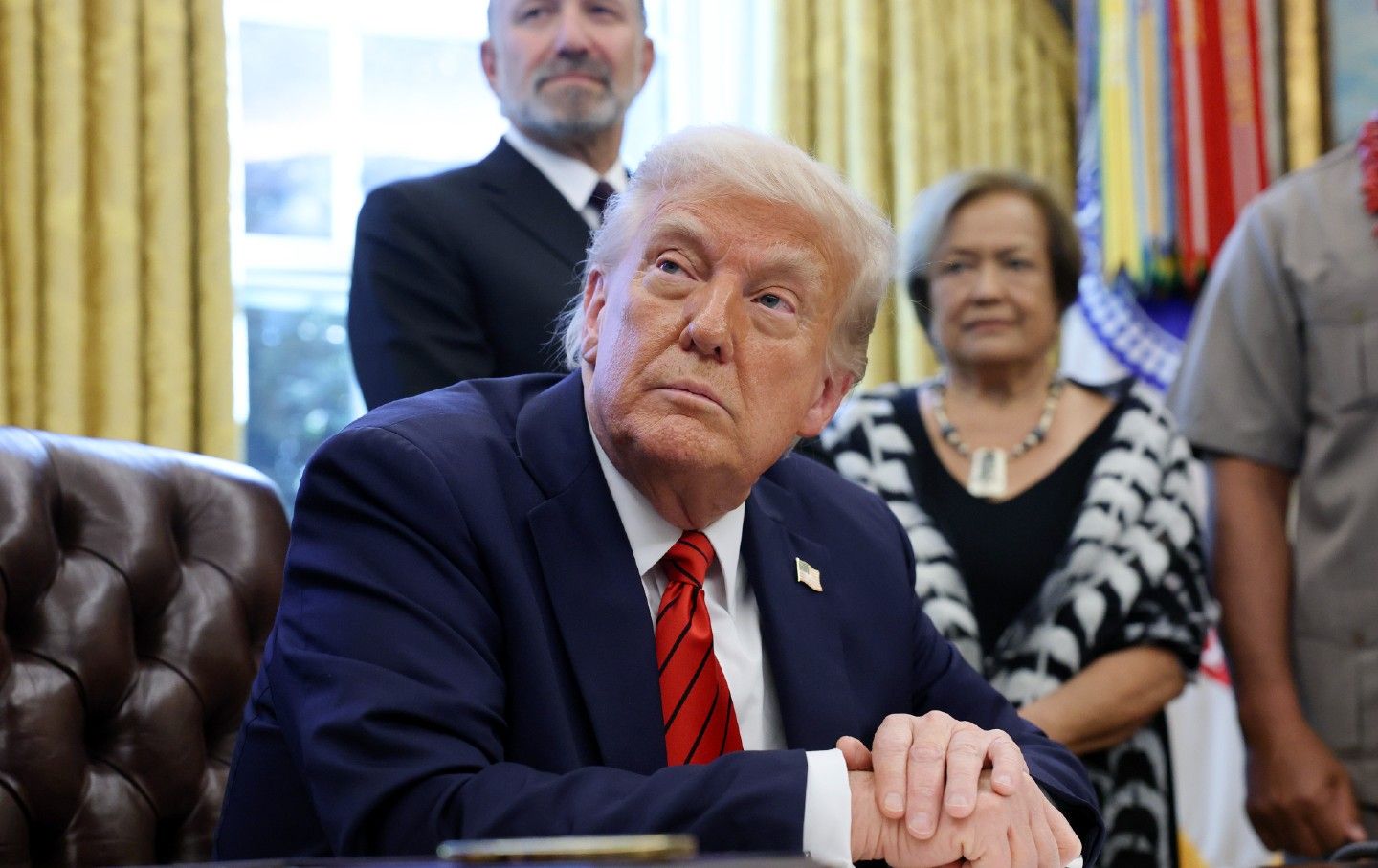
Paramount’s settlement with Trump is a symptom of deep structural rot in our corporate media system.
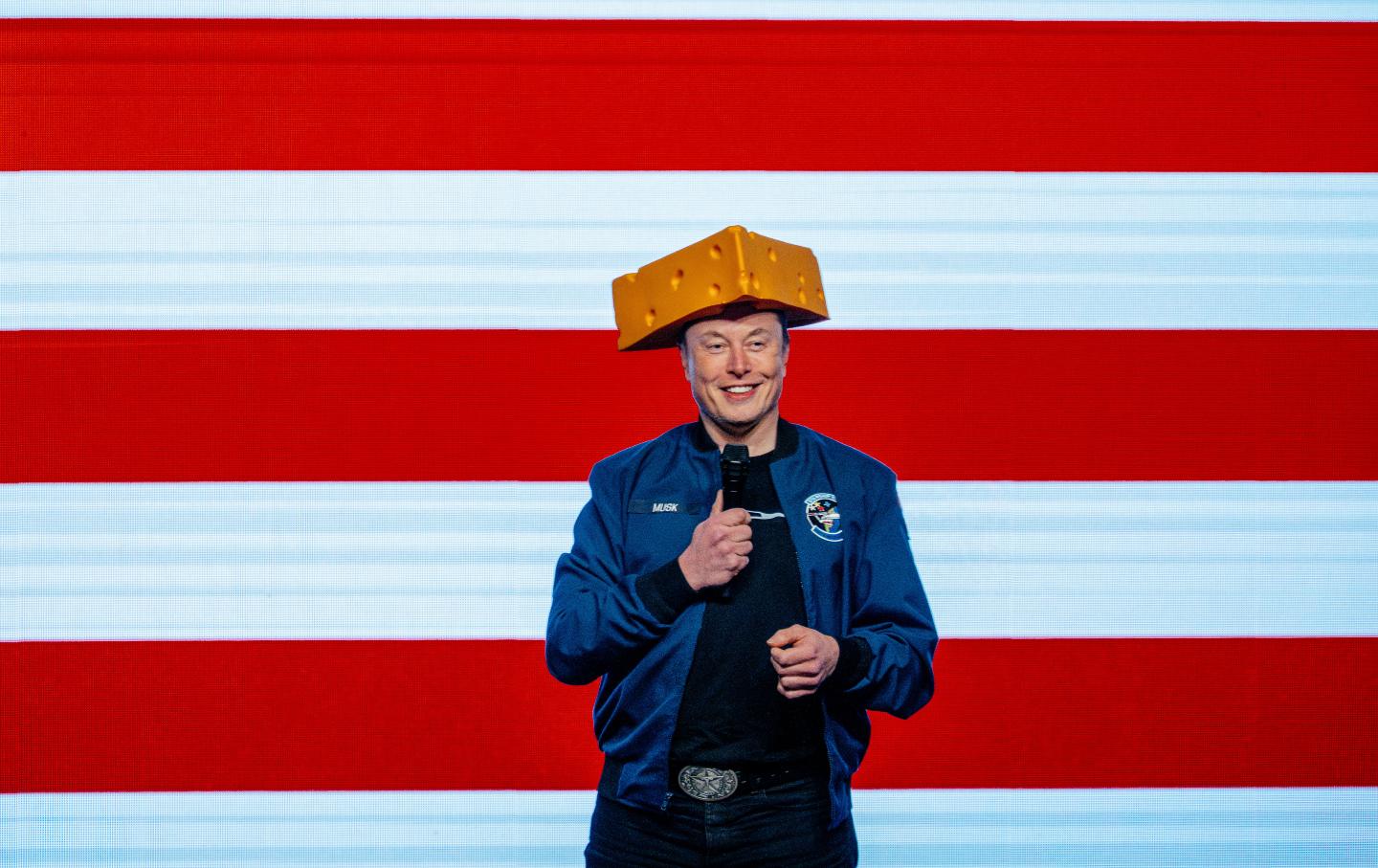
The tech mogul’s latest intervention in US politics serves as a perfect proof of concept for the futility and stupidity of billionaire-driven politics.
Trump’s defense secretary loves taking selfies while presiding over administrative anarchy.
