
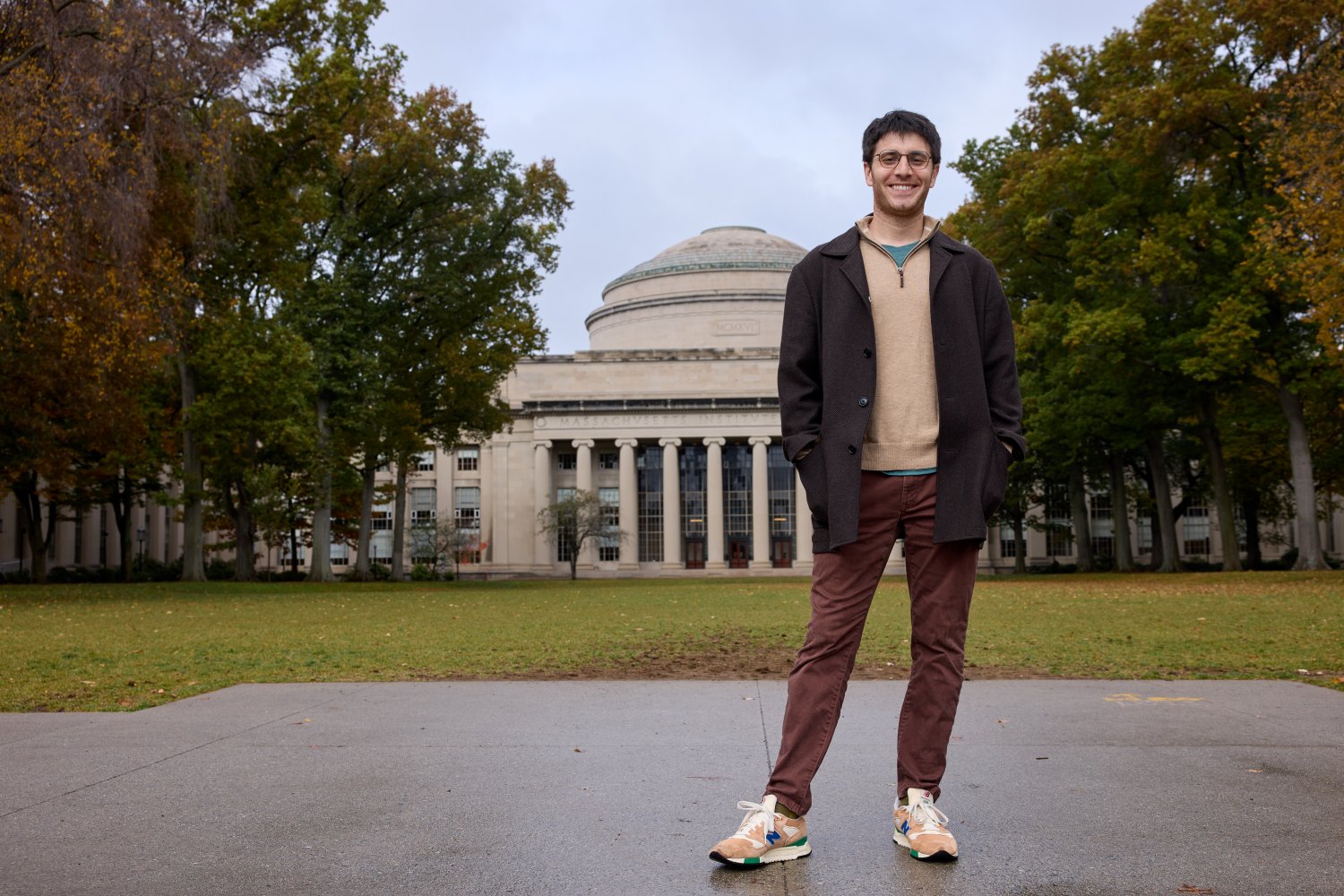
“MIT hasn’t just prepared me for the future of work — it’s pushed me to study it. As AI systems become more capable, more of our online activity will be carried out by artificial agents. That raises big questions: How should we design these systems to understand our preferences? What happens when AI begins making many of our decisions?”
These are some of the questions MIT Sloan School of Management PhD candidate Benjamin Manning is researching. Part of his work investigates how to design and evaluate artificial intelligence agents that act on behalf of people, and how their behavior shapes markets and institutions.
Previously, he received a master’s degree in public policy from the Harvard Kennedy School and a bachelor’s in mathematics from Washington University in St. Louis. After working as a research assistant, Manning knew he wanted to pursue an academic career.
“There’s no better place in the world to study economics and computer science than MIT,” he says. “Nobel and Turing award winners are everywhere, and the IT group lets me explore both fields freely. It was my top choice — when I was accepted, the decision was clear.”
After receiving his PhD, Manning hopes to secure a faculty position at a business school and do the same type of work that MIT Sloan professors — his mentors — do every day.
“Even in my fourth year, it still feels surreal to be an MIT student. I don’t think that feeling will ever fade. My mom definitely won’t ever get over telling people about it.”
Of his MIT Sloan experience, Manning says he didn’t know it was possible to learn so much so quickly. “It’s no exaggeration to say I learned more in my first year as a PhD candidate than in all four years of undergrad. While the pace can be intense, wrestling with so many new ideas has been incredibly rewarding. It’s given me the tools to do novel research in economics and AI — something I never imagined I’d be capable of.”
As an economist studying AI simulations of humans, for Manning, the future of work not only means understanding how AI acts on our behalf, but also radically improving and accelerating social scientific discovery.
“Another part of my research agenda explores how well AI systems can simulate human responses. I envision a future where researchers test millions of behavioral simulations in minutes, rapidly prototyping experimental designs, and identifying promising research directions before investing in costly human studies. This isn’t about replacing human insight, but amplifying it: Scientists can focus on asking better questions, developing theory, and interpreting results while AI handles the computational heavy lifting.”
He’s excited by the prospect: “We are possibly moving toward a world where the pace of understanding may get much closer to the speed of economic change.”
